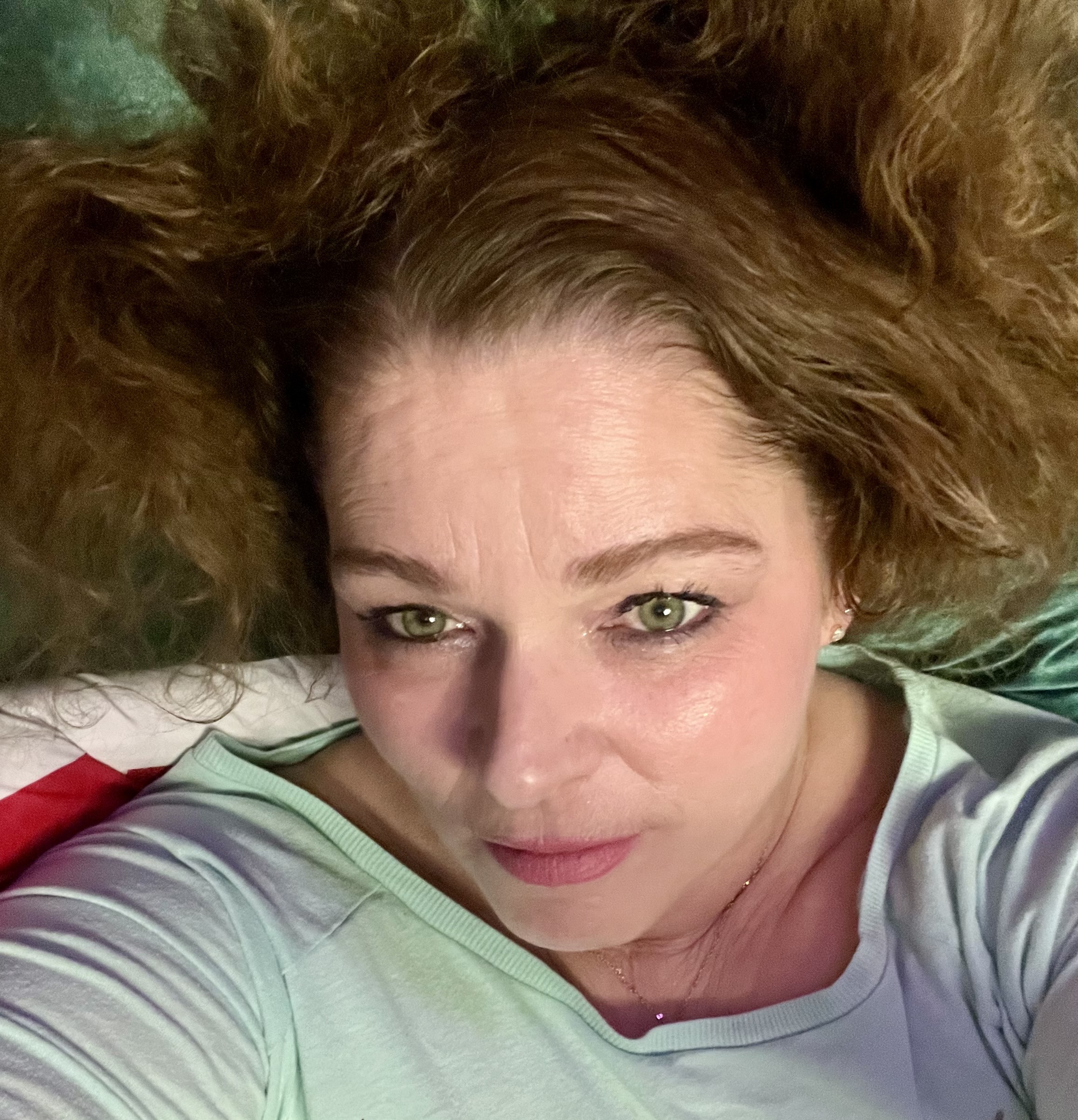
Founder and advocate
I’m Crystal. I am more than a diagnosis.
I created Bipolar, Fully Human to challenge the way people with bipolar disorder are reduced to assumptions, stereotypes, and labels.
I was diagnosed with bipolar disorder in my early twenties. Since then, I have experienced overmedication, addiction, rehabilitation, eating disorders, hospitalization, abuse, loss, treatment barriers, and being dismissed because of my diagnosis.
I am also a mother, wife, grandmother, creator, researcher, advocate, and human being. Bipolar disorder is part of my life, but it does not define everything about me.
Why I created this project
I know what it feels like when a diagnosis becomes the only thing people see.
Too often, ordinary emotions are treated as symptoms. Questions about treatment are viewed as refusing help. Reports of mistreatment are dismissed. A person’s words, choices, and credibility can be judged through the diagnosis before anyone listens to what actually happened.
I created Bipolar, Fully Human because people need to understand that individuals with bipolar disorder do not all think, feel, or behave the same way.
A diagnosis cannot tell someone whether a person is dangerous, intelligent, trustworthy, loving, capable, or worthy. It cannot tell a person’s entire history, character, or future.
When no one listens
My diagnosis has been used to explain away things that happened to me.
I experienced physical and emotional abuse during a former marriage. When I tried to speak about what was happening, my experiences were often dismissed or attributed to bipolar disorder.
I was raped, and the trauma resulted in a hospital stay. While I was hospitalized, court orders were obtained involving my children.
After leaving the hospital, I was separated from my children for an extended period of time.
I had never harmed my children. I had never been arrested or charged with a crime, and I had no criminal record. More than two decades later, that remains true.
I repeatedly returned to court seeking custody and the right to remain part of my children’s lives. When I could no longer afford an attorney, I learned how to represent myself. I never stopped trying to rebuild my relationship with my children.
Choices shaped by fear
I was married more than once when I was younger. I left relationships because I was unhappy, but not every relationship was easy or safe to leave.
I entered one marriage partly because I believed being married would help me demonstrate stability and allow me to spend more time with my child. My former husbands got along, and that sometimes gave me opportunities to be present for ordinary moments, including putting my son to bed.
I did not enter that marriage because I was in love. It was a deeply misguided choice, but I made it with the hope of being closer to my child.
That relationship became frightening. My husband repeatedly threatened to kill me if I left and used stories about what he claimed to have done to someone else to make those threats believable. I understood that leaving could place me in danger.
During that marriage, he cut me near my eye badly enough that I needed stitches. I am not ready to explain everything surrounding what happened, and I may never be. He initially refused to take me to the hospital. When I eventually received medical care, I gave an untrue explanation for the injury because I was afraid to say that he had caused it.
I take responsibility for entering a marriage for the wrong reasons and for choices I made while trying to prove that I was stable. At the same time, those mistakes did not make threats or abuse acceptable.
What may look from the outside like a simple failure to leave can feel very different when someone has made you believe that leaving could cost you your life.
What no one asked
In my twenties, I was hospitalized multiple times. Some of those hospitalizations occurred while I was experiencing physical or emotional abuse. Arguments, disagreements, and understandable reactions to painful circumstances were often attributed to bipolar disorder without anyone asking what had happened to me or why I was in so much pain.
At times, I allowed other people to take control of my treatment and medication decisions. I was exhausted, afraid of creating more conflict, and desperate not to feel the pain anymore. I believed that being numb might be easier than continuing to hurt. The medications sometimes caused severe shaking and involuntary movements, but I remained quiet because I wanted others to see me differently and did not want more problems.
Losing custody of my children came before my addiction—not after it. I tried cocaine shortly after the court order because I was desperate to escape the pain of losing them. That does not make the decision safe or healthy, but the order of events matters. My substance use did not cause me to lose custody; it began afterward as an attempt to cope with the loss.
Many of the most difficult moments in my life grew from pain that was not being heard. When I cried for help, I was often dismissed. Eventually, it felt as though I had to scream before anyone would listen—and even then, my diagnosis often received more attention than the circumstances causing my distress.
I do not share these experiences to suggest that I handled every situation well or that other people were responsible for every difficult thing that happened in my life. I made serious mistakes, hurt people, remained silent when I needed to speak, and sometimes tried to escape my pain in harmful ways. I take responsibility for those choices.
But taking responsibility for my mistakes does not require me to accept responsibility for abuse, trauma, or the decisions other people made. Both truths can exist at the same time. I was imperfect, and I was also a person in pain who needed to be heard.
A note about privacy
I tell my experiences without publishing private names or identifying details. The purpose is accountability and understanding—not harassment, retaliation, or exposing another person to harm.
Words I have never forgotten
After I had been stable for more than a year, I returned to court and continued fighting for my children. The judge looked down at me from the bench and said:
“You are only stable because you don’t have your kids.”
A direct quote spoken to me during a custody proceeding
That statement has stayed with me. Instead of allowing my stability to demonstrate growth, responsibility, or recovery, it was used against me.
Experiences like this are why stigma is not merely an uncomfortable opinion. Stigma can affect whether someone is believed, whether their progress is recognized, and whether they are treated as a complete human being.
Navigating medical care
Seeking help and receiving appropriate help are not always the same thing.
I have been prescribed medications without receiving an explanation of what they were intended to do or what side effects I should watch for. When problems continued, additional medications were sometimes added instead of reconsidering dosages, combinations, or alternatives.
One psychiatric provider stopped treating me without notice. I was left without appropriate continuity of care, medication support, or a realistic way to obtain another provider quickly.
It took at least ten months to obtain a new doctor because many providers would not accept Medicare, and the provider who did had no earlier availability.
During that time, other medical professionals repeatedly told me to take my medication and see a psychiatric doctor. They did not understand—or did not believe—that I was trying to receive care and could not access it.
Patients should be able to ask what a medication does, discuss side effects, question a treatment plan, and request alternatives. Participating in medical decisions is not the same as refusing care.
Lived experience and continued learning
Bipolar disorder does not make someone unintelligent.
My advocacy is grounded in lived experience, independent study, and a commitment to examining reliable evidence.
Diploma in Psychology of Everyday Life
Mental Health Studies
Suicide, violent behavior, and substance abuse
Independent Research
Treatment, stigma, trauma, medications, patient participation, and access to care
These studies and certificates support my advocacy and research. They do not represent a license to diagnose or provide individual medical treatment.
What I promise
My experience is real—but it does not represent every person with bipolar disorder.
Personal experiences on this website will be clearly identified as lived experience. Medical claims and statistics will be supported by reliable sources whenever possible.
Research will be explained carefully, including who was studied, what was measured, when the information was published, and what the evidence cannot prove.
This project will not use one person’s behavior, one news story, or one research study to define an entire group of people.